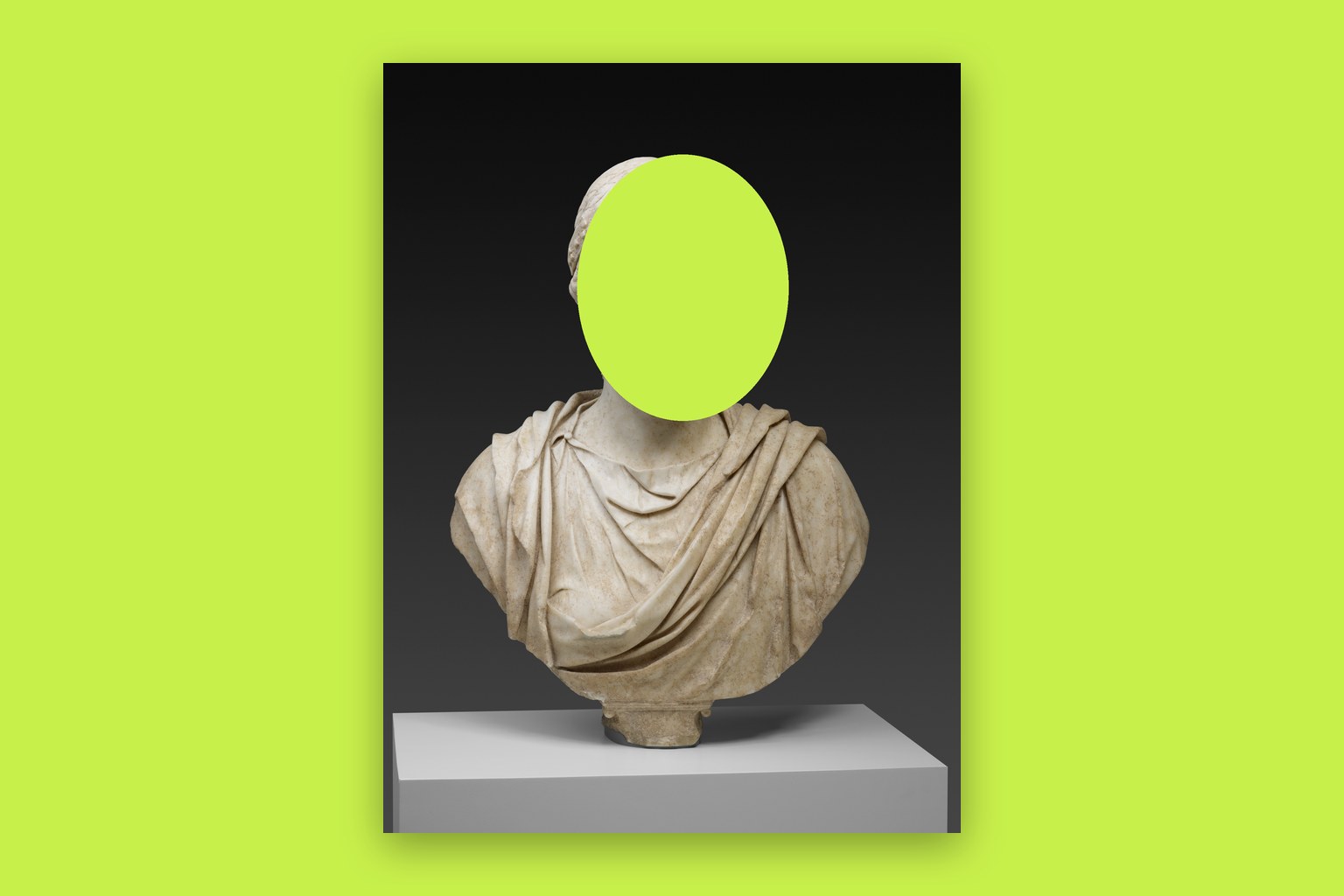
Filed under: No-Self, Explained
What Is Non-Duality? A Straight Answer From a Shirt Company
Non-duality says the line between you and everything else is drawn in pencil. Here's what that means, where the idea comes from, and what it definitely isn't.
4 min readCase No. 000-899

Non-duality is the view that the split between a separate self and the world it experiences isn't ultimately real. There is experience, one seamless happening, and the "I" turns out to be part of it rather than a little viewer sitting behind the eyes, watching. The word comes from the Sanskrit advaita, which means "not two."
That's the whole answer. If you stop reading here, you understand more than most of the people selling it by the weekend retreat. Everything below is the long version, plus jokes, because we are a shirt company and the jokes are load-bearing.
What is non-duality, in plain English?
Look at how experience normally gets described. There's me, in here. There's the world, out there. Sights, sounds and thoughts arrive at the border like packages, and I sign for them.
Non-dual traditions ask you to check that picture against what actually happens. When you hear a dog bark, is there a hearing, then a separate someone who receives the hearing? Or is there just the bark, happening, with the "someone" added a beat later as commentary? Most people who look carefully find the second description is closer. The seer, the seeing and the seen don't arrive as three items. They arrive as one event, and the mind splits it up afterward, the way a sports broadcast adds a play-by-play to something that was already over.
So non-duality isn't a belief that everything is secretly a cosmic soup. It's a claim about where the line between "me" and "not me" comes from: it's drawn by thought, after the fact, in pencil.
Where the idea comes from
Non-dual ideas have deep roots in several traditions, and they don't all say the same thing.
- Advaita Vedanta, a school of Hindu philosophy most associated with the teacher Adi Shankara (usually dated to the 8th century), holds that the individual self (atman) and ultimate reality (Brahman) are not two. The sense of being a separate person is a kind of mistaken identity.
- Buddhist traditions come at it from the other direction. Instead of saying the self is everything, they say there's no fixed self to find in the first place (the teaching of anatta, or no-self). Zen and Tibetan Dzogchen both emphasize seeing experience directly, without the split into subject and object.
- Western philosophy has its own cousins. David Hume went looking for his self in 1739 and reported that whenever he looked inward he only ever found particular perceptions, never a perceiver holding them: "I never can catch myself at any time without a perception." He wasn't a mystic. He was just honest about what he couldn't find.
These are different maps, drawn by people with different goals. When you read someone saying "the non-dual teaching is X," it's worth asking which tradition they mean.
What non-duality is not
Because the idea is slippery, it attracts misreadings. Three come up constantly.
It isn't "everything is love." Some modern teachers wrap non-duality in warm language, and that's their business, but the core claim is structural, not sentimental. Seeing that there's no separate self doesn't automatically make you feel like hugging a parking lot.
It isn't "nothing matters." People hear "there's no separate you" and jump to nihilism. But the claim is about how experience is put together, not about whether your choices count. Your dentist appointment still exists. Please attend it.
It isn't a special feeling you can buy. Non-dual awareness is usually described as ordinary rather than spectacular. That's bad news for anyone selling an upgrade, and good news for everyone else, since you're already standing in it.
One way to look for yourself
Douglas Harding, a British architect-turned-philosopher, turned this into a one-minute experiment. Point at something across the room. Notice it: a lamp, a wall, a cat that resents you. Now point at the floor. Then at your feet. Then turn the finger around and point at the place you're looking out of.
What do you see there? Not a face. Not a head. Just the room, presented to no visible someone.
You may find this obvious and pointless. That's a perfectly common reaction, and it's also, according to several traditions, roughly the point. Non-duality isn't something you add. It's something you stop overlooking.
The Department of Non-Existence has reviewed your attempt to find the looker and is pleased to report that it was unsuccessful. No further action is required.
Why we put it on a shirt
Because it's the funniest true sentence we know. "You do not exist" sounds like a threat until you realize it's the opposite: the version of you that's always defending its territory, managing its image and narrating its own performance turns out to be optional. The experience keeps happening without it, and it's lighter.
That's why the original design is called You Do Not Exist: a non-dual teaching compressed to four words and printed on a shirt you can wear to the grocery store. Its quieter sibling, There Is Nobody Here, says the same thing in a lower voice. Someone will squint at it. Occasionally someone will nod. The nod is the whole reason the brand exists.
Where to go from here
If non-duality clicked, the next question is usually "fine, but what about the voice in my head that insists it's me?" That's the narrator, and it deserves its own post. If it didn't click, try the pointing experiment once more, tomorrow, when you're not trying so hard. Trying is one of the narrator's favorite hobbies.
Sources
Questions
Is non-duality the same as Buddhism?
No. Non-dual ideas show up in Advaita Vedanta (a Hindu school), in several Buddhist traditions such as Zen and Dzogchen, and in some Western mystics and philosophers. They describe it differently and don't all agree on the details.
Does non-duality mean nothing matters?
No. It's a claim about the structure of experience (no separate observer standing outside it), not a claim that people, choices or kindness are unimportant.
Do I have to meditate to understand it?
Most traditions recommend some form of practice, because non-duality is meant to be noticed rather than believed. But you can understand the idea, and try a simple pointer, in about a minute.