Filed under: No-Self, Explained
The Headless Way: Douglas Harding's One-Minute Experiment, Tried Badly
An English architect noticed he couldn't see his own head and built a philosophy on it. Here's the experiment, how to do it, and how we managed to do it wrong.
5 min readCase No. 000-674
The Headless Way is a practice developed by the English philosopher Douglas Harding, built on a deliberately obvious observation: from where you are, you can't see your own head. You see the room, your hands, maybe the blurry edge of your nose. Where your face "should" be, there's just the scene, presented to no visible someone. Harding argued that noticing this directly, instead of trusting the picture of yourself as a head looking out at a world, is a fast way into what contemplative traditions call non-dual awareness.
It sounds like a party trick. It is also one of the most influential party tricks in modern spirituality. We tried it, failed it in several new ways, and will now explain it properly.
Who was Douglas Harding?
Douglas Edison Harding (1909 to 2007) was an English architect turned philosopher and teacher. In 1943, while in India, he had the experience he later wrote up in his best-known book, On Having No Head (1961). As he told it, he simply stopped thinking for a moment and noticed that where he'd always assumed his head was, there was nothing: just the view, the mountains, the world, with no observer showing up in it.
Harding spent the rest of his life turning that moment into experiments anyone could try, without needing a mountain, a teacher or a belief system. He connected the experience to Zen in particular, where a classic question asks to see your "original face" before your parents were born. His experiments are now taught as the Headless Way.
The Headless Way pointing experiment
The best known experiment takes about a minute. Do it now, ideally somewhere nobody is watching you.
- Point at something across the room. A door, a lamp, a plant. Notice that your finger points at a thing: it has color, shape, edges.
- Point at the floor. Another thing. Same deal.
- Point at your feet, then your body. Still things, seen from above, getting closer.
- Now turn the finger around and point at where you're looking from.
What do you actually see there? Not "what do you know is there." What do you see? Harding's answer, and most people's, is that you don't see a face or a head. You see a kind of open space that holds the room, the finger and everything else. The finger points at things, and then it points at no-thing, which turns out to be where all the things are showing up.
Harding liked to say this isn't a feeling to work up. It's a fact to notice, and it's available instantly, which is why it pairs so well with a short attention span.
How we did it wrong
In the interest of science, here are the most common ways to fail the experiment, all field-tested by us.
- Thinking about it instead of looking. The narrator will immediately say "ah, yes, I am the space," and now you're looking at a thought about space, which is a thing again. Look, don't describe.
- Checking a mirror. The mirror shows a head over there, not here. Harding actually used this as a separate experiment: the face in the mirror is always over there, behind the glass, never here where you are.
- Waiting for fireworks. Nothing dramatic happens. Most people find it plain, ordinary and slightly embarrassing in its obviousness. That's normal. The point is that it's always this ordinary and always available.
- Doing it in public. Pointing at your own face while staring into space in a coffee shop is a fast way to meet new people who are concerned about you.
The Department of Non-Existence attempted the pointing experiment and reports the following: finger present, room present, head not observed. Results consistent with previous inspections.
Two more Headless experiments
Harding designed many experiments; two others are worth trying once.
The closed-eye experiment. Close your eyes and, without relying on memory or imagination, ask what shape you are right now. Not what shape you know your body is, but what you actually find: patches of sensation, sounds, a sense of space, with no clear outline or edge. Most people discover that the "body shape" they assume they are isn't present in direct experience at all. It's supplied by memory.
The tube experiment. Two people fit their faces into opposite ends of a tube (a paper bag with the bottom cut off, or a large sheet of paper taped into a tube wide enough for a face) and look at each other through it. At the far end, each sees a face. At the near end, where their own face is supposed to be, each finds no face at all: just the open space in which the other face appears. Harding called this being "face to no-face." It's a strange, quiet experience, and a decent icebreaker if your friends are patient.
Instructions and variations for all of these are on the Headless Way's own site, linked below.
Why it isn't just a trick
The obvious objection is that of course you can't see your own head; eyes don't face backward. Harding knew that. His point wasn't optics. It was about which description you live inside. Most of us operate from the third-person picture: I am a body with a head, looking out of two holes at a world. The first-person fact is different: there's the world, and there's no viewer appearing in it. Harding thought that gap explained a lot of the strain of being a person, and that seeing it, even briefly, loosened it.
It's a close cousin of Hume's search for a self that kept turning up only perceptions, and of the Buddhist inventory of anatta. The Headless Way just gets there with your index finger.
The shirt version
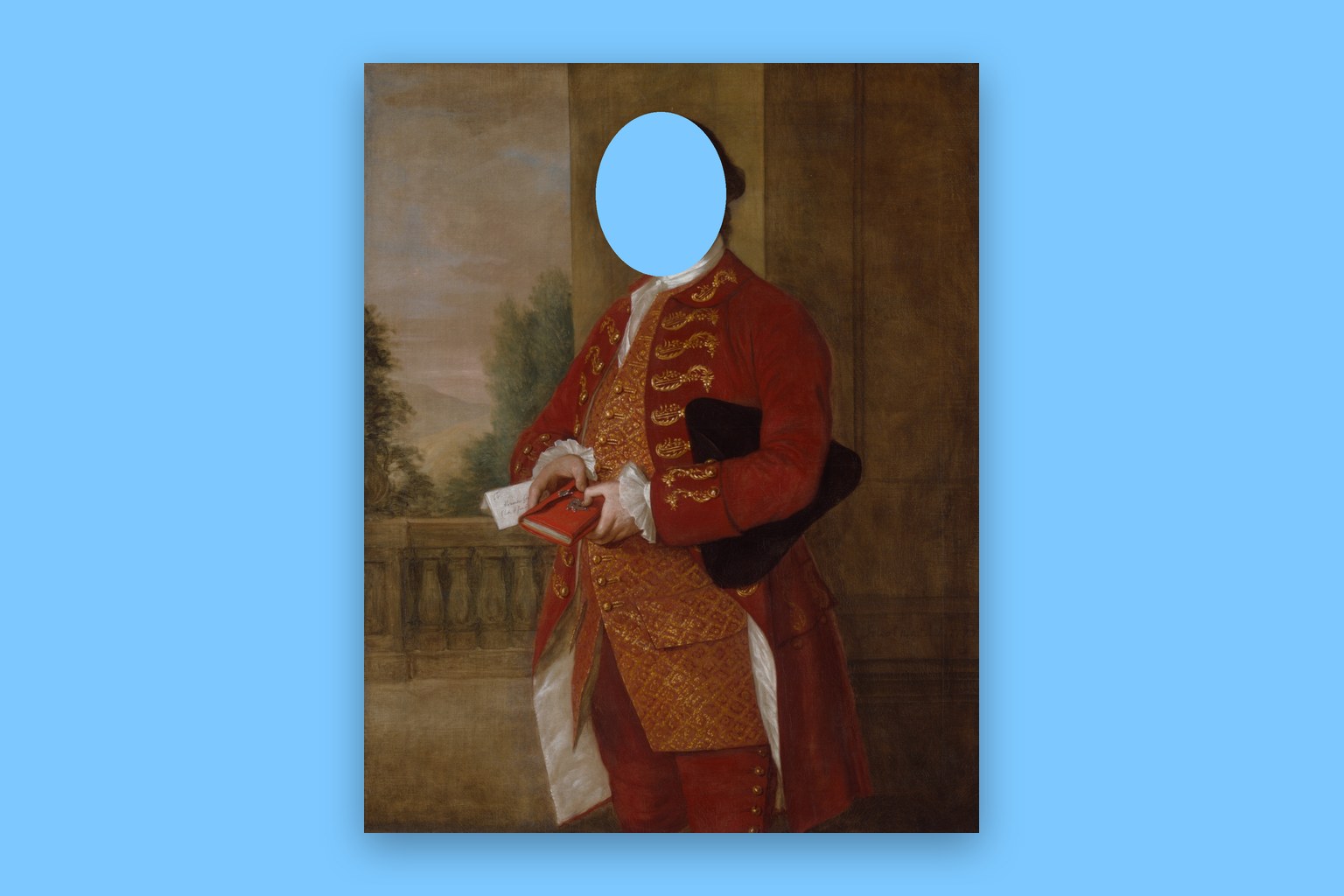
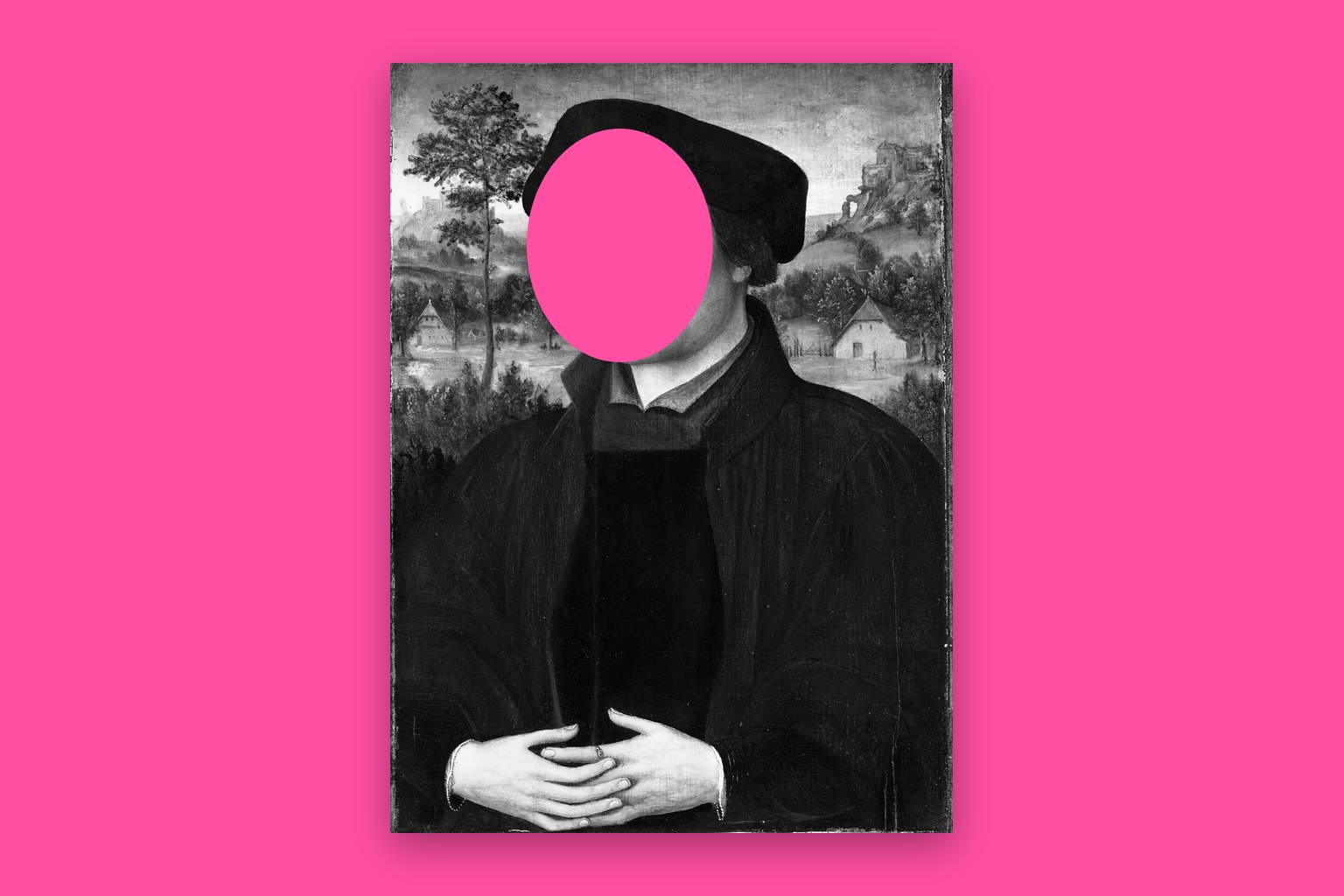
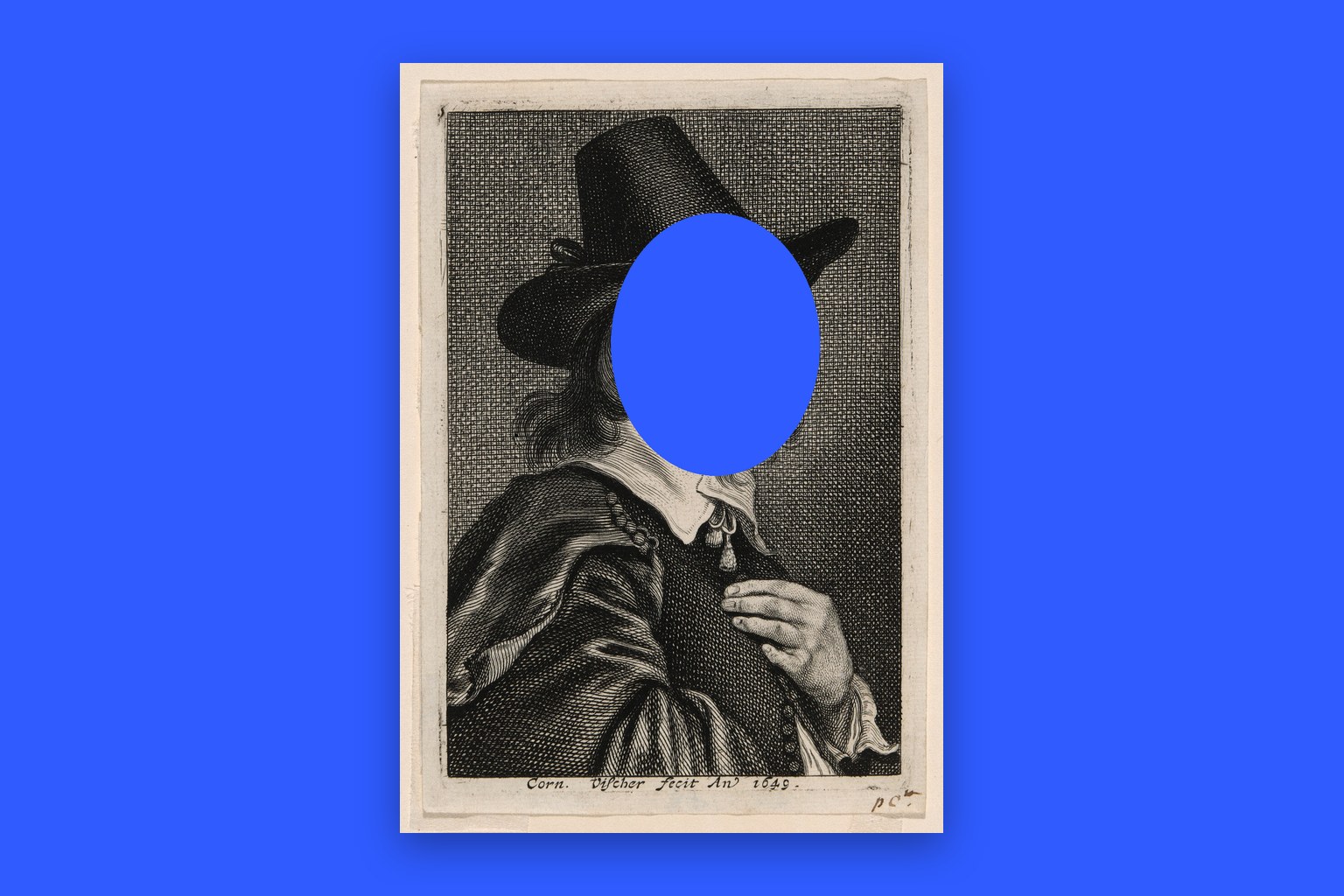
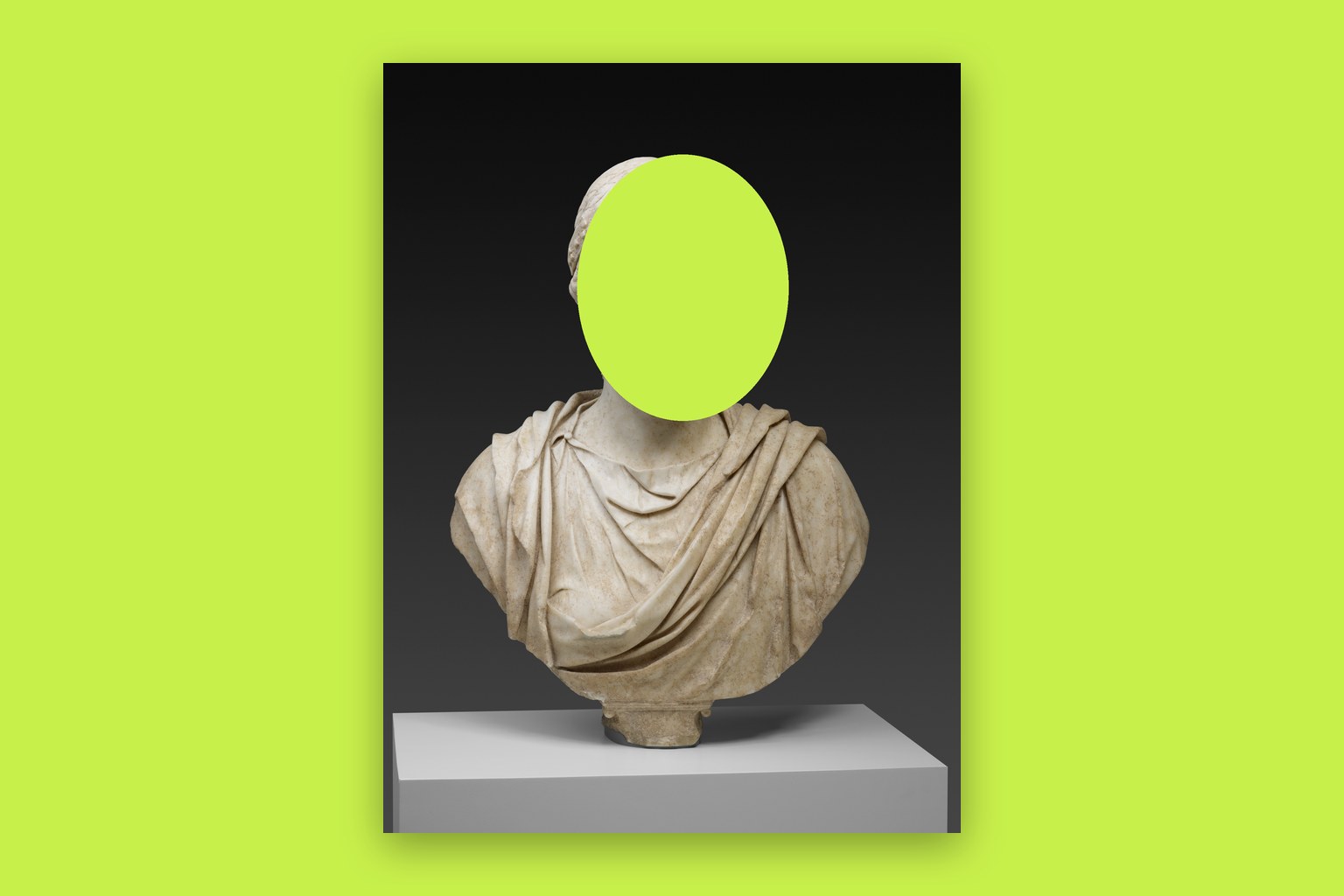
Harding's experiment is the most literal argument for our design There Is Nobody Here: look where you're looking from, and report back. It's also the reason our blog covers are old portraits with the faces cut out. That's not vandalism. It's a citation.
If you want the bigger picture first, start with what non-duality is.
Sources
Questions
Who was Douglas Harding?
An English architect, philosopher and spiritual teacher (1909 to 2007). He wrote On Having No Head (1961) and developed simple experiments, now called the Headless Way, for noticing non-dual awareness directly.
Is the Headless Way a religion?
No. Harding presented his experiments as tests anyone can try, connected to Zen and other traditions but not requiring any belief.
What if I just see the tip of my nose?
That's normal and part of the experiment. Notice where the nose sits in the view: at the edge of a space that holds everything else, rather than on a face you can see.